
Lawns · 4 min read
Sowing a wildflower meadow area in your garden
A meadow area brings wildflowers, bees and butterflies into a garden, and it needs very little mowing. It asks for poor soil, very little seed and some patience.

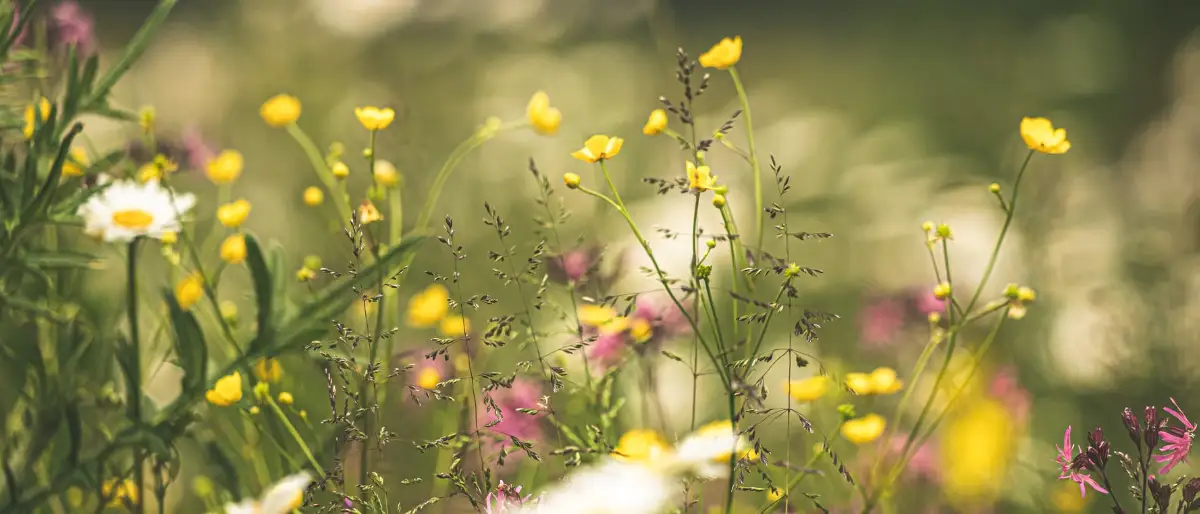
A meadow area, not a lawn
A meadow area is grass and wildflowers left to grow long and cut only once or twice a year. It suits a corner of the garden, the far end of a lawn, a sunny bank or the ground under fruit trees. It won't take football, and it looks untidy for part of the year. In return it needs very little mowing and gives food and shelter to insects and birds. Some people call it a meadow lawn: you can mow a path through it, or a neat edge around it, and leave the rest long.
SYLVARA: our meadow mixture
SYLVARA is our meadow mixture. It combines smooth-stalked meadow grasses with 20% UK-native wildflowers, to make an area of natural meadow that's a haven for wild birds, butterflies and bees.
It's sown far more thinly than a lawn: 10 g per m², which is 1 kg per 100 m² (an area 10 m by 10 m). The seed it contains are very small, so compared with normal lawn seed you need much less weight of seed for the same area. Don't be tempted to sow it thicker. Sown thickly, the grasses crowd out the wildflowers.
Choose the spot
- Sun. Most meadow flowers need sun, so choose an open spot rather than a shady corner.
- Poor soil. Wildflowers do best on low-fertility soil. On rich garden soil, grasses and vigorous weeds grow fast and crowd them out. So never feed a meadow area.
- Lower the fertility if you need to. On rich ground, such as an old vegetable bed or a well-fed lawn, lifting the turf or taking off the top few centimetres of topsoil gives the wildflowers a better chance.
Prepare the ground
- Clear it. Remove the existing grass and weeds. Perennial weeds such as docks, nettles, thistles and couch grass need to come out completely, roots and all, because they'll outgrow young wildflowers.
- Make a fine surface. Dig or rake the soil to a fine, crumbly surface, and firm it by treading. Don't add compost or fertiliser.
- Let the weeds come up first. If you can, leave it for a few weeks so weed seeds in the soil germinate, then hoe or rake them off before you sow.
When to sow
Spring (March and April) and early autumn (September and October) are the best times to sow a meadow. You can sow through the summer if you keep it watered, but early autumn sowings are usually the easiest. Avoid winter: the soil is too cold for seed to establish.
How to sow
- Weigh the seed for your area at 10 g per m².
- Bulk it up. Mix the seed with dry sand. It makes such a small amount of seed easier to spread evenly, and you can see where you've been.
- Sow in two passes. Split it into two halves, and sow one walking up and down and the other walking across.
- Sow on the surface. Don't rake it in deeply or cover it with soil. Many wildflower seeds are tiny and need to be near the surface.
- Press it in. Firm the seed into the soil with a roller, a plank or by treading, so it's in good contact with the ground.
- Water. Keep the soil moist for the first few weeks.
The first year
Be patient. The first year is mostly about getting the plants rooted. Many meadow wildflowers are perennials that take more than a season to build up before they flower, and what you see in the first summer depends on the weather, the soil and when you sowed. Don't expect a sheet of colour straight away.
- Cut it back when it reaches about 15 cm, to keep fast-growing weeds down, and rake off the clippings. You may need to do this more than once in the first summer.
- Pull out docks, thistles and nettles by hand as soon as you see them.
Looking after a meadow area
From the second year, a common pattern is:
- let it grow and flower through spring and summer;
- cut it once flowering is over, in late summer or early autumn;
- leave the cut material on the ground for a few days so seed can drop, then rake it all off and take it away;
- keep mowing a path or an edge through the season if you like a tidy frame.
Always take the cuttings away. Left to rot down, they feed the soil, and richer soil favours the grasses over the flowers.
Work out your seed
The lawn planner has a meadow option. Choose it, enter your area, and it works out the SYLVARA you need at 10 g per m², rounds up to whole packs and shows the price. It also tells you whether now is a good time to sow. You can see all our lawn mixes on the lawn seed page, and our guide to sowing a new lawn covers the rest of the garden.
For a field margin or a larger wildlife area on a farm, see our environmental seed mixes. For anything else, ask us.
Common questions.
No. You'll get long grass and whatever flowers are already in the lawn, such as daisies and clover. Lawn grasses are vigorous, so if you want a meadow then sow a meadow mix onto cleared, low-fertility ground.
Not really. A meadow is meant to be left long, and regular trampling flattens it. Mow a path through it for the way you walk.
It can be as small as a few square metres. Even a small patch of long grass and flowers gives insects food and shelter, and a 1 kg pack of SYLVARA sows 100 m².
A meadow is grasses and flowers growing together. SYLVARA's smooth-stalked meadow grasses make up most of the mix, with 20% UK-native wildflowers.
Before you drill
Talk it through with an agronomist.
Tell us the field and what you want it to do. We'll help you settle the mix and the timing — and blend it if you'd like us to.
The Drill
Seasonal advice, in your inbox.
The Drill is our free newsletter delivered periodically to your inbox with seasonal advice and information. A few notes a season - no noise.