
Sports pitches · 5 min read
End-of-season pitch renovation for clubs and schools
What a volunteer-run club or school needs to do after the last match: the renovation steps, how much grass seed to sow, and how many bags of ENDURA S to order for your pitch.

Why renovate at the end of the season
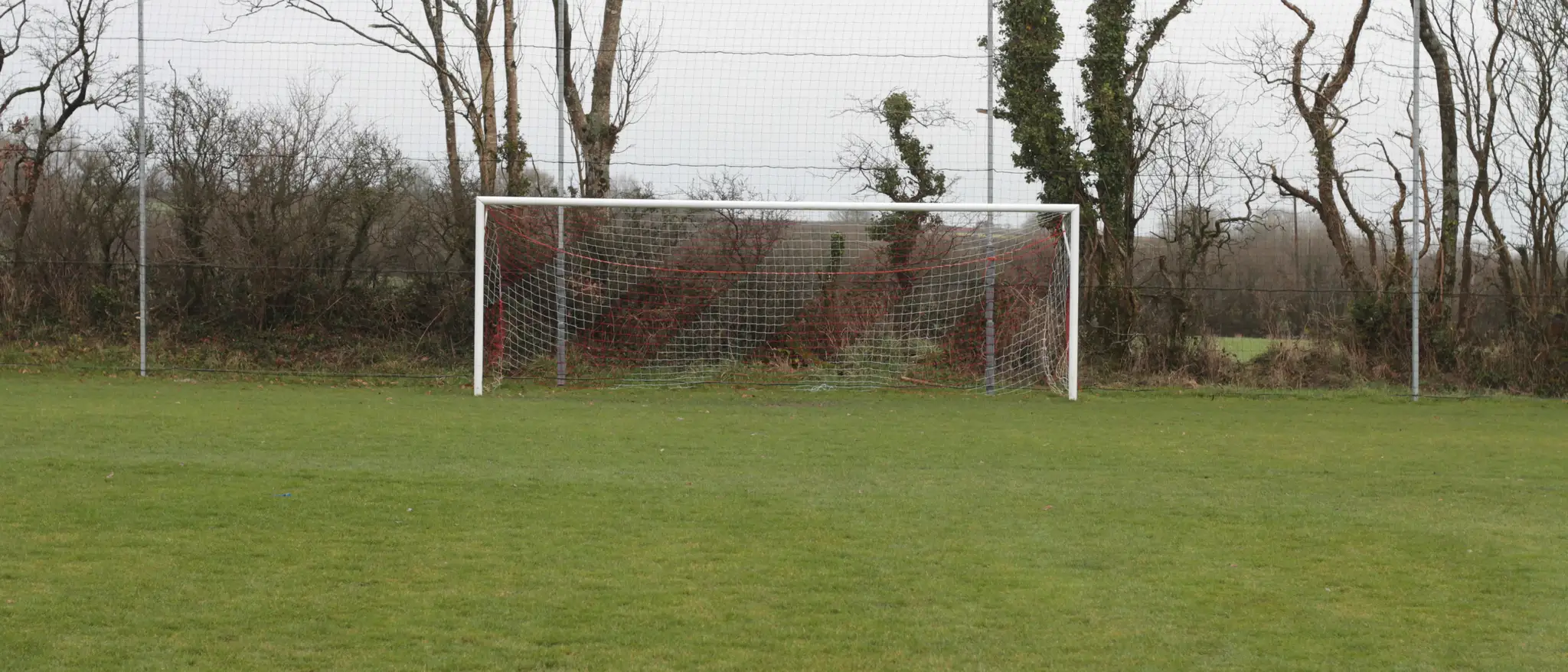
A winter of play is hard on grass. Heavy rain, low light, cold soil, compaction and studded boots all take their toll, and by spring the goalmouths, the centre circle and the warm-up areas are often bare. Grass can't recover much while matches go on. The end of the season is your chance to put it right, because the summer gives new grass months to grow before the boots come back.
Most clubs renovate in April or May, as soon as the last match is played and the soil is warming up. Early autumn can work too, for a pitch that's free in September while the soil is still warm.
Before you start
- Measure the pitch. Length times width gives the area in square metres. You'll need it to order seed and top dressing.
- Walk it and mark the worst areas. Goalmouths, the centre and any bare patches need more seed than the rest.
- Line up the help and the kit. Scarifiers, aerators and seeders can usually be hired, or a local grounds contractor can do the machine work while your volunteers do the rest.
- Agree the rest period. Make sure nobody has booked the pitch for summer training or events.
The renovation steps
1. Mow it down
Cut the grass short and collect the clippings, so the machines can get at the surface.
2. Scarify
Scarifying rakes out dead grass, thatch and moss, and opens the surface so seed can reach the soil. Go over it in more than one direction and clear what comes up.
3. Aerate
Spike or slit the pitch to relieve the compaction a winter of play leaves behind. It lets air, water and roots back into the soil.
4. Top-dress
Spread a sandy top dressing and work it in with a drag mat or brush. It fills hollows, improves the levels and gives the seed something to settle into. Your supplier can advise on the material and the amount for your soil.
5. Overseed
Sow seed over the whole pitch, with extra on the worn areas (rates below). A disc seeder puts the seed into slits in the soil, where it's protected and in good contact. If you broadcast, sow half the seed one way and half across it for even cover, then heavy roll to ensure good seed contact with the soil.
6. Feed and water
A pre-seed fertiliser helps young grass get going; ask your supplier which one suits. Then keep the surface moist until the seedlings are up and rooting. In a dry spring that means watering.
7. Keep play off
This is the step clubs find hardest. Keep players, dogs and vehicles off until the new grass is rooted and has been mown a few times. Ideally, rest the pitch for the whole summer. Make the first cuts high, with a sharp blade, and lower the height gradually.
How much seed?
The Grounds Management Association (GMA) gives these rates for football pitches:
- about 10 g/m² for a light overseed of the whole pitch;
- about 35 g/m² when disc-seeding;
- 50–70 g/m² on goalmouths and other badly worn areas.
How many bags of ENDURA S?
ENDURA S comes in 10 kg bags. To work out how many you need, multiply your area in m² by the rate in g/m², divide by 1,000 to get kilograms, then divide by 10 and round up. The pitch sizes below are examples, so measure yours.
- A full-size pitch, 100 m × 64 m (6,400 m²), light overseed at 10 g/m²: 6,400 × 10 = 64,000 g, which is 64 kg, or 7 bags.
- The same pitch, disc-seeded at 35 g/m²: 6,400 × 35 = 224,000 g, which is 224 kg, or 23 bags.
- Two goalmouths of about 20 m × 10 m each (400 m² in all), at 50–70 g/m²: 20–28 kg, or 2–3 bags on top of the whole-pitch seed.
- A junior pitch, 60 m × 40 m (2,400 m²): 24 kg (3 bags) at 10 g/m², or 84 kg (9 bags) at 35 g/m².
So a full-size pitch with a light overseed and heavier seeding on both goalmouths needs about 9 or 10 bags.
Is the soil warm enough?
Grass seed needs warm, moist soil to germinate. As a general guide, wait until the soil is about 8–10°C and rising. In much of the UK that means from mid to late April, and later on high or northern ground. In cold soil the seed just sits there, the birds find it, and what comes up is patchy. If spring is cold, wait a week or two: seed sown into warm soil soon catches up. In warm, moist conditions you should see seedlings within two or three weeks.
About ENDURA S
ENDURA S is our sports pitch mixture: a quality grass seed mixture with varieties selected to withstand the wear and tear of a playing field. It's the one sports mixture we list. If your ground needs something else, such as a cricket square or a council specification, we can make up a non-standard mixture. Ask us.
Ordering
Order ENDURA S online, or see our sports pitch seed page. For the clubhouse lawn, see our lawn seed. Need a large quantity, delivery outside mainland Great Britain, or a mixture to your own specification? Contact us.
Common questions.
It's a false economy. Agricultural ryegrasses are bred to feed livestock, so they grow fast all season, and through mild winters too, which means far more mowing for your volunteers. Amenity grasses are bred to make a thick, dense turf and to grow slowly once established.
It depends on the weather and how quickly the grass roots. A pitch renovated in spring and rested all summer is usually ready for the new season; areas sown later, or in a dry or cold spell, need longer.
Start with the worst areas: goalmouths, the centre circle and any bare patches. Scarify, seed and top-dress those properly, then overseed the rest lightly if time and budget allow.
The steps are much the same, but measure the area, because a rugby pitch is bigger than a football pitch. A cricket square is a specialist surface, so ask us before you order for one.



Before you drill
Talk it through with an agronomist.
Tell us the field and what you want it to do. We'll help you settle the mix and the timing — and blend it if you'd like us to.
The Drill
Seasonal advice, in your inbox.
The Drill is our free newsletter delivered periodically to your inbox with seasonal advice and information. A few notes a season - no noise.