
Cover crops · 6 min read
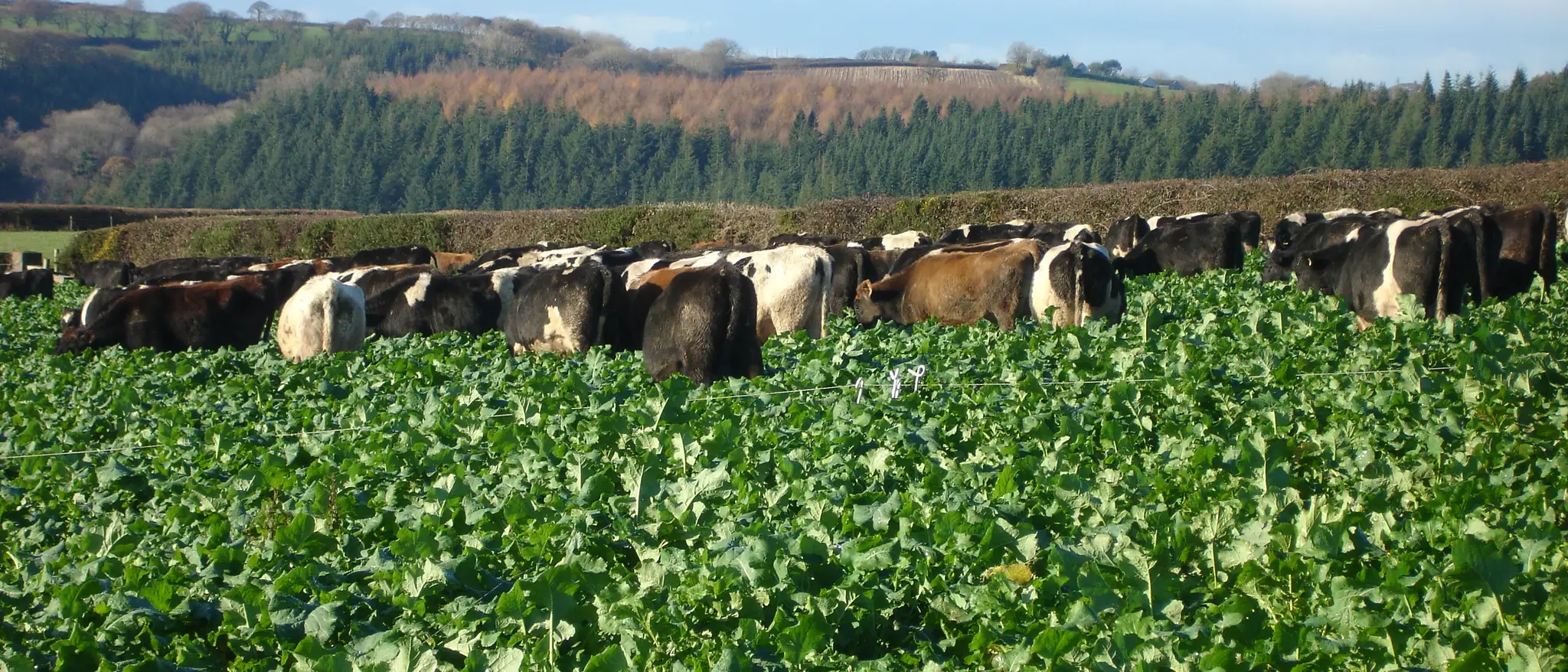
Winter cover crops for sheep and cattle grazing
The difference between a cover crop and a catch crop, how to choose between our winter covers, grazing them with sheep or cattle, and which SFI actions they fit.

Cover crop or catch crop?
The two names overlap, and plenty of crops do both jobs. As a rule of thumb:
- A cover crop is grown mainly for the soil. It covers ground that would otherwise sit bare between two cash crops, holds on to nutrients and protects the soil structure over winter. It isn't harvested as a cash crop, though you can often graze it.
- A catch crop is grown to "catch" a short gap between two main crops and turn it into something useful, usually forage. Stubble turnips sown after winter barley and grazed off by sheep before a spring crop are the classic example.
So a cover crop you graze is a bit of both. What matters is which job comes first, because that decides the mix, the sowing date and whether an agri-grant scheme lets you graze it.
Our winter cover crops
- ZIPPY PLUS is a multi-species brassica cover crop. It's fast to establish and gives a very palatable, high-protein crop for all stock. It comes in one-acre (10 kg) bags, and is available as organic or conventional seed. It can be used for SFI CSAM2.
- PREMIUM is a six-month grass cover crop, made for undersowing spring cereals. Its grasses don't grow up through the cereal, so they don't get in the way at harvest. Once the cereal is off, it gives grazing from autumn until you plough for the next crop in spring. It comes in 15 kg bags, sown at 5 kg an acre, as organic or conventional seed, and can be used for SFI CIPM3.
- PREMIUM PLUS is a multi-species winter cover crop made from our PREMIUM grass cover with legumes and herbs added. On land at risk of nitrate leaching, or land that drains straight into a watercourse, it gives a dense cover that protects the soil from erosion and run-off. It comes in one-acre bags as organic or conventional seed, and can be used for SFI CSAM2 and CIPM3.
- Forage brassicas (TEMPO, SPRINT, RAPID and their vetch PLUS versions) are catch crops: sown in summer to feed stock through the winter gap. Our stubble turnips and forage brassicas guide. covers choosing, seed rates and sowing them.
- SHIELD is the odd one out. It's a multi-species cover crop for spring or summer sowing, to protect the soil in a summer gap before an autumn crop. It isn't a winter grazing crop, and under SFI SOH3 it can't be grazed or cut.
Choosing: start with the job
- Winter grazing for sheep or cattle, with an SFI payment: ZIPPY PLUS. CSAM2 lets you graze, as long as the cover stays well established.
- Feeding stock is the main point: a forage brassica mix. See the stubble turnips guide.
- Protecting vulnerable soil over winter, with grazing as a bonus: PREMIUM PLUS.
- Spring cereals going in anyway: undersow PREMIUM under one of our spring cereal blends or Combicrop®. You get a cover and grazing after harvest without a separate sowing.
- A summer gap before an autumn crop, with no stock involved: SHIELD.
Not sure? Ask us with your rotation, your stock and your sowing date.
When to sow
A winter cover needs time to grow before the days shorten. As a general rule, sow as soon as you can after harvest, into warm, moist soil: a late sowing means less cover and less grazing by winter. CSAM2 asks for sowing in late summer or early autumn, into warm soil. Forage brassicas go in from July to August for winter feed. PREMIUM goes in with the spring cereal, so it's already there at harvest.
Grazing a cover crop with sheep or cattle
Grazing turns a cover crop into feed, and the dung and urine go back on the field. Some general points:
- Check the rules first. If you are claiming agri-grant SFI CSAM2 you are allowed to graze provided the crop stays well established, with little bare soil. SFI SOH3 doesn't allow grazing at all.
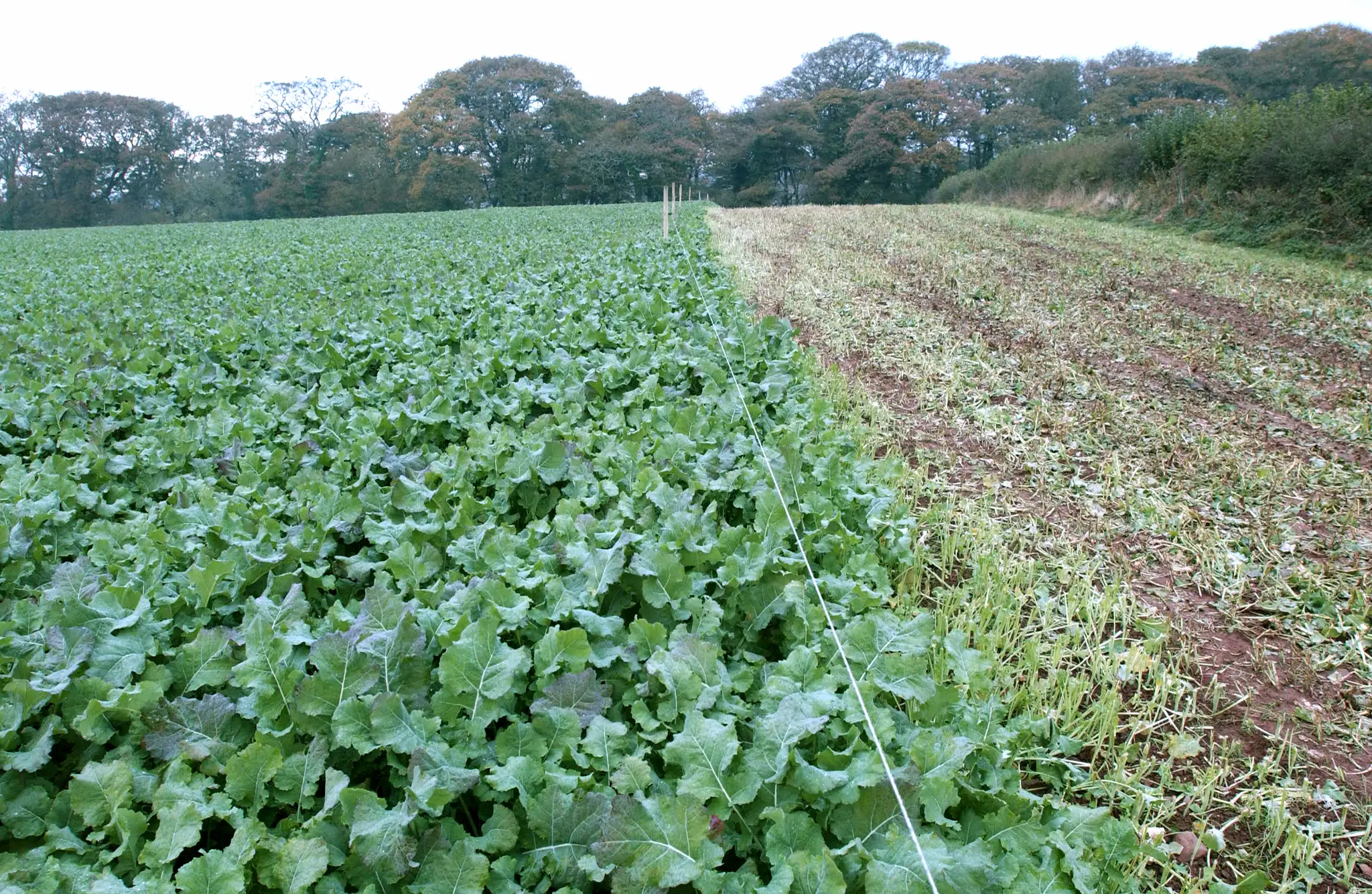
- Graze in blocks or strips. Moving an electric fence across the crop cuts waste, and a back fence stops stock going back over ground they've grazed.
- Look after the soil. Heavy stock on wet ground cause poaching and compaction, which undoes much of the good the crop did. Sheep are usually easier on winter ground than cattle. If you graze cattle, choose drier, free-draining fields and move them off when it's wet.
- Give them somewhere to lie. A run-back onto grass or stubble, with water and shelter, helps.
- Not your stock? Many arable farmers let a neighbour's sheep graze a cover crop over winter. Agree the dates, the fencing and when the stock come off before the crop goes in.
A cover crop, and a brassica one especially, is a big change of diet from grass. How fast to move stock onto it, what to feed alongside it, and any mineral or health questions are for your vet or nutritionist, because the answer depends on your stock. We can help with the crop.
PREMIUM after an undersown cereal gives what's known as clean grazing: the field has been in cereals all summer, so it hasn't carried livestock that year. Ask your vet how that fits your worm control plan.
Agri Grant Schemes
Rates are for new SFI26 agreements, from gov.uk as checked on 9 October 2026. SFI26 closed to new applications on 22 September 2026, and Defra says there will be another chance in 2027. Existing SFI 2023 or 2024 agreements carry on at the rates you agreed.
- CSAM2, multi-species winter cover crop (£129/ha a year): ZIPPY PLUS, PREMIUM PLUS and their organic versions. It needs species from at least two plant families, well established over winter (usually early December to late February). Don't destroy it before the end of winter, unless an early spring crop follows.
- CIPM3, companion crop (£55/ha a year): PREMIUM, PREMIUM PLUS and their organic versions.
- SOH3, multi-species summer-sown cover crop (£163/ha a year): SHIELD and Organic SHIELD. No grazing or cutting.
- SOH2 and SOH4 aren't offered to new SFI26 agreements. Defra names CSAM2 as the nearest replacement for SOH4, winter cover after maize.
- Wales: the Welsh Government lists cover crops among the options in the Sustainable Farming Scheme's temporary habitat creation, due to open in November 2026. Its rates and rules hadn't been published when we checked. See our Wales schemes page.
Scheme rules change, so check them with your scheme before you order seed. Our SFI seed guide lists every action that needs seed.
Ordering
ZIPPY PLUS and the forage brassicas are on our forage crops and stubble turnips range page. PREMIUM and PREMIUM PLUS sit with our grass leys, and SHIELD with the environmental mixes. For help matching a cover crop to your rotation and stock, ask us.
Common questions.
ZIPPY PLUS and PREMIUM PLUS come in one-acre bags, so order one bag per acre. A 15 kg bag of PREMIUM sows about three acres at 5 kg an acre. Check SHIELD's product page for its bag size and how much it sows.
Every cover crop in this guide comes in both organic and conventional versions.
No. It needs species from at least two plant families: brassicas, legumes, cereals or grasses, and herbs. ZIPPY PLUS (brassica-based) and PREMIUM PLUS (grass, legumes and herbs) are therefore both suitable for it.
Graze it off, top it, or work it in, leaving time for it to break down before the next crop. Under CSAM2 you can't destroy it before the end of winter, except up to six weeks before an early-sown spring crop.
It can be. A cover crop builds soil organic matter and structure, holds on to nutrients that would otherwise wash out, and smothers weeds; legumes in the mix leave nitrogen for the next crop. Grazing it adds feed on top.
Seed for this job
Related ranges.

Before you drill
Talk it through with an agronomist.
Tell us the field and what you want it to do. We'll help you settle the mix and the timing — and blend it if you'd like us to.
The Drill
Seasonal advice, in your inbox.
The Drill is our free newsletter delivered periodically to your inbox with seasonal advice and information. A few notes a season - no noise.