
Paddocks · 5 min read
Reseeding a horse paddock: seed choice and timing
Why horse paddocks need different grass from farm leys, Seed choice and laminitis risk, whether to reseed or overseed a poached paddock, and when to sow.

Why horses need different grass
Paddocks for horses and ponies need different grasses from fields grazed by cattle and sheep. Agricultural ryegrass and clover mixtures are often sold as suitable for paddocks. They aren't. Agricultural ryegrasses are bred to produce high-sugar forage, for fast weight gain and high milk yields in farm livestock. Kept young and short by grazing, they're also low in fibre. For horses and ponies, that's the opposite of what you want.
PRIZE: what's in the bag
PRIZE is our paddock mixture made for horses and ponies. It has no ryegrass and no clover. It contains the following species:
- Meadow fescue
- Timothy
- Smooth-stalked meadow grass
- Strong creeping red fescue
- Blue fescue
The Meadow fescue and timothy give the bulk of the grazing, and the meadow grass and fescues help knit the sward into a dense turf. With good paddock management, PRIZE gives grazing for many years, and a hay or haylage crop if you want one. It comes as conventional seed, in 10 kg bags that sow one acre (about 4,047 m²). A hectare takes about two and a half bags.
Laminitis: what seed can and can't do
No grass seed makes a paddock laminitis-safe. All grass contains sugar, and how much changes with the season, the weather and the time of day. Leaving out ryegrass and clover, as PRIZE does, helps keep the sugar down compared with an agricultural mix but even with PRIZE the following matter when it comes to horse health:
- Grazing time. How many hours a day your horse is out, and at what time of day.
- The season. Grass grows fast in spring and again in autumn, and fast-growing grass can be rich.
- Frost and cold, bright weather. Grass stressed by frost or cold can hold more sugar.
- Stocking. How many horses share the paddock, and how much grass is in front of them.
- The horse. Its type, weight, age, workload and history. A horse or pony that's had laminitis, or has a metabolic condition, needs its own plan.
If your horse is at risk, talk to your vet before you change its grazing. That includes turning out onto a newly sown paddock, which can grow fast and lush in its first season.
Reseed or overseed?
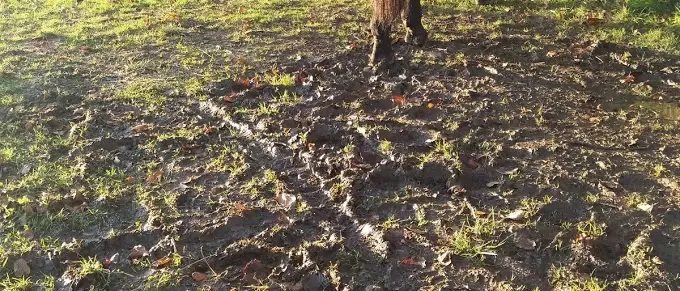
Overseed if the paddock still has a fair cover of decent grass, with bare or thin patches where it's been poached: gateways, around feeders and water troughs, and along the fence line. Seed into the gaps is quicker and cheaper than a full reseed, and the paddock is out of use for less time.
Reseed if most of it is weeds, bare ground or poor grass, or if you want rid of ryegrass and clover in the old sward. Overseeding adds new grass, but it won't take out what's already there.
Overseeding a poached paddock
- Wait until the ground has dried enough to work without doing more damage.
- Harrow to pull out dead grass and moss, level the hoof prints and open up the surface.
- Sow PRIZE onto the bare and thin areas, by hand for small patches or with a spreader.
- Roll, so the seed is in firm contact with the soil.
- Fence off the sown areas and keep horses off them.
How much seed to use when overseeding depends on how thin the grass is. Ask us about your paddock.
Reseeding a whole paddock
- Deal with the weeds first. Ragwort is particularly important to eradicate as it is poisonous to horses: pull it up by the roots and take it away. Don't leave it lying, because wilted ragwort is still poisonous and horses are more likely to eat it.
- A soil test tells you whether you need lime, phosphate or potash before you sow.
- Cultivate to a fine, firm seedbed, sow at one bag per acre, and roll.
When to sow
Sow in April, or from late August into September. Seed needs warm, moist soil to germinate and grow away. Midsummer is often too dry, and later in the autumn the soil is too cold for young grass to establish before winter.
Keeping horses off
A new sward needs time to root before it can take hooves and teeth. As a general guide:
- keep horses off until the grass is well rooted: pull a handful, and if the plants come out roots and all, it isn't ready;
- top it with a mower once or twice first, which helps the grass thicken up;
- start with short spells of grazing on dry days, and take horses off when the ground is wet;
- expect a spring sowing to need until late summer, and an autumn sowing until the following spring before grazing.
Splitting the paddock with electric fencing lets you rest a sown section while your horses use the rest.
Hay and haylage
You can shut a field of PRIZE up for a hay or haylage crop as well as graze it. If you want a field just for cutting, PRIMUS is worth looking at. It's a timothy, meadow fescue and white clover ley that grows well even in wetter fields and persists on problem wet ground. Two things to know before you choose it: it contains white clover, and it contains a festulolium, which is a cross between a ryegrass and a fescue. It has no straight ryegrass, and it is a cutting ley not a grazing mix for horses. Ask your vet if the clover and festulolium matters in the hay for your horses. PRIMUS comes in organic and conventional versions, in one-acre bags.
Ordering
Order PRIZE online, or see our horse paddock seed page. For the lawn by the house or yard, see our lawn seed. Not sure whether to reseed or overseed, or how much you need? Ask us.
Common questions.
Yes, and it will thicken up thin ground. But the ryegrass and clover already there will stay. If you want a paddock without them, a full reseed is the way to do it.
Start with a soil test, and correct lime, phosphate or potash if it shows you need to. Go easy on nitrogen: it creates fast, lush growth, which is what you're trying to avoid for most horses and ponies.
Rest and rotate paddocks where you can, move feeders and water troughs around, consider hard standing or mud mats at gateways, and bring horses off when the ground is very wet. Horses, particularly when shod, can poach ground badly and sometimes a sacrifical paddock is your only way forward.
Before you drill
Talk it through with an agronomist.
Tell us the field and what you want it to do. We'll help you settle the mix and the timing — and blend it if you'd like us to.
The Drill
Seasonal advice, in your inbox.
The Drill is our free newsletter delivered periodically to your inbox with seasonal advice and information. A few notes a season - no noise.