
Cover crops · 5 min read
Stubble turnips and forage brassicas: choosing, sowing and grazing
How to choose between stubble turnips, forage rape, kale and a mix, when to sow, what seed rate to use, and how the crop fits your stock, your soil and the agri-grant schemes.

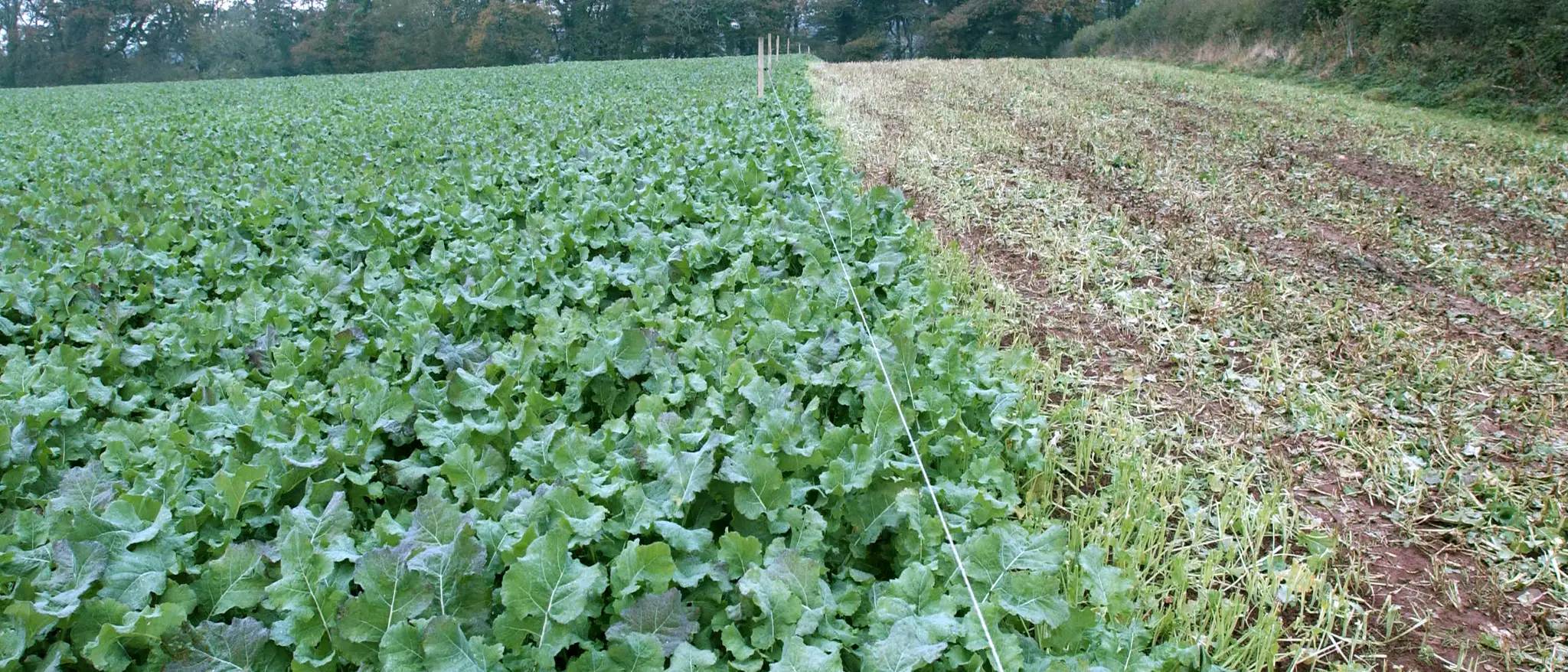
Why grow forage brassicas?
Forage crops have been under-used for years, which is a shame, because in a good rotation they do several jobs at once. Stubble turnips, forage rape and kale work in organic and conventional systems alike:
- Winter feed. Sown in July or August, they give nutritious, cost-effective forage for your stock over the winter.
- A break crop. They put a brassica break into cereal and grass rotations, reducing soil pestssuch as wire worms and leather jackets.
- A cover before reseeding. They make an ideal cover crop to protect the soil before you reseed a field in spring.
- A dry-summer safeguard. Sown in May or June, they give you forage to fall back on in a dry summer.
Why a blend?
Every one of our mixes blends several varieties rather than relying on one. Mixing varieties helps reduce leaf disease, and crops with less disease yield more and are more palatable to stock.
- Stubble turnips: TEMPO. Three stubble turnip varieties. Very fast to establish, with high yields, and ideal for sheep, beef and dairy cattle. The mix of varieties also increases stock intake.
- Forage rape: SPRINT. Two high-yielding forage rape varieties that make a very thick crop for all stock.
- Rape, stubble turnip and kale: RAPID. Forage rape with leafy stubble turnips and a little kale. Fast to establish, giving a very palatable, high-protein crop for all stock.
We don't sell a straight forage kale. It comes in RAPID and RAPID PLUS as part of the mix. If you want a forage kale crop on its own, ask us.
Adding vetch: the PLUS mixes
TEMPO PLUS, SPRINT PLUS and RAPID PLUS take the brassica mixtures above and add vetch. The vetch:
- supplies quality forage and improves the palatability of the feed;
- leaves a substantial amount of nitrogen in the soil for the following crop;
- gives you the chance to graze the vetch in spring, before you plough.
ZIPPY PLUS is a different kind of mixture: a multi-species brassica cover crop. It is fast to establish, gives a very palatable, high-protein crop for all stock, and is suitable for SFI CSAM2.
Seed rates
The mixtures come in 12 kg bags. Our rates for them are:
- TEMPO: 2 kg per acre direct drilled, or 3 kg broadcast (for conventional seed). 3 kg per acre direct drilled, or 4 kg broadcast (for organic seed)
- SPRINT and RAPID: 3 kg per acre direct drilled, or 4 kg broadcast.
The PLUS mixes and ZIPPY PLUS come in one-acre bags, so one bag sows one acre. Each product page gives its rate.
When to sow, and when to graze
Sow in July or August for forage over the winter. Sow in May or June instead if you want a fall-back for a dry summer. How soon you can graze depends on the season, the site and the mix, so ask us about your field.
Grazing sheep and cattle
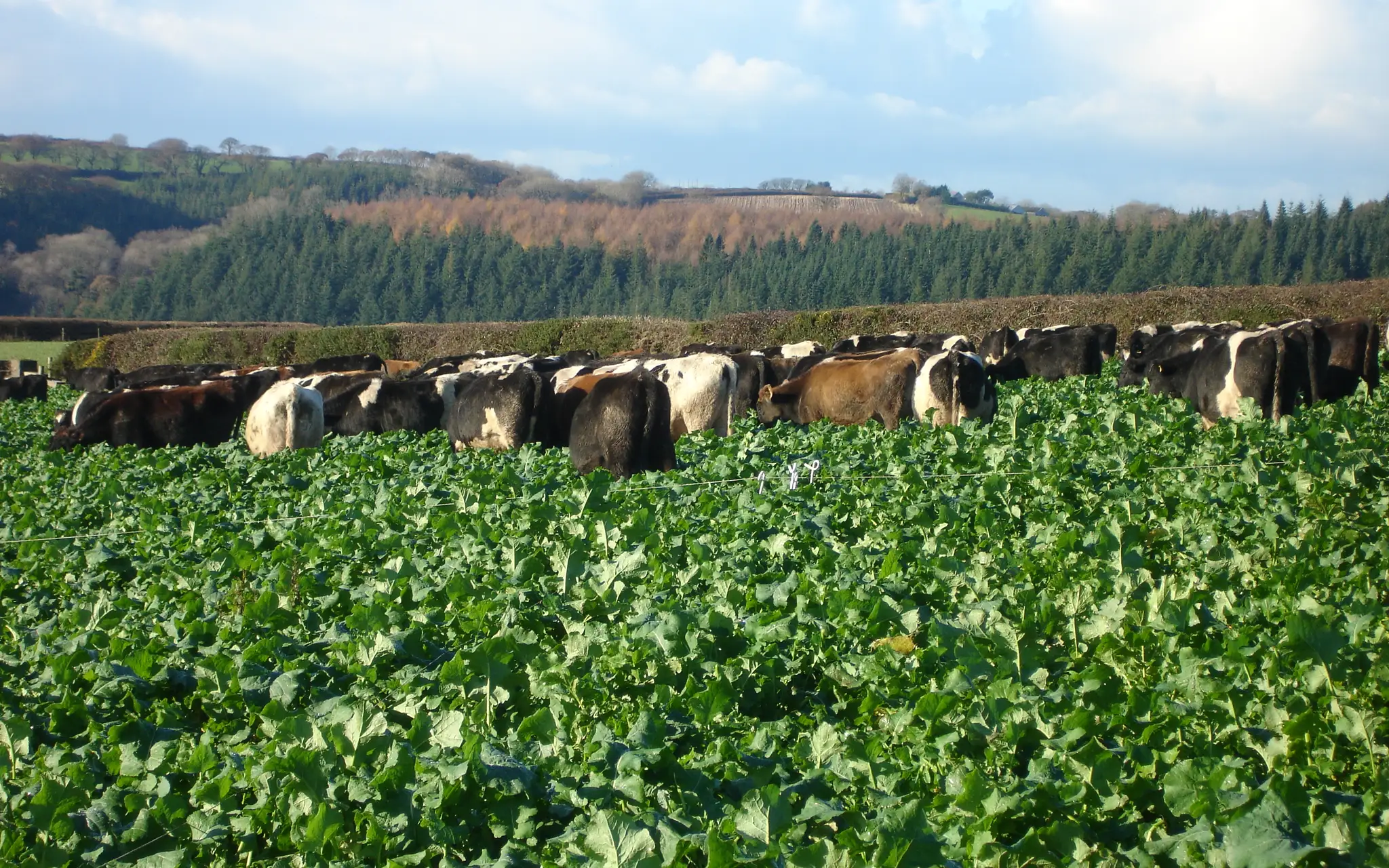
Our forage brassica mixtures are designed to be fed to stock: whether you are grazing sheep, beef or dairy cattle. If you don't keep stock yourself, the crop can be grazed by someone else's sheep or cattle under contract, or topped over winter.
A brassica crop is a big change of diet from grass. How quickly to move stock onto it, whether to strip graze, and what else to feed alongside it are questions for your vet or nutritionist, because the answer depends on your stock. We can help with the crop itself.
What they do for the soil
Grown as a cover crop or green manure in a rotation, a brassica forage crop can:
- helps to reduce leather jacket and wire worm in the following crop;
- raise nutrients, including phosphate and potash, from lower in the soil;
- stop soluble nutrients leaching from the soil;
- cover the ground and protect soil structure;
- smother weeds and stop weed seedlings growing.
Choose a PLUS mix and the vetch leaves nitrogen for the next crop as well.
Agri-grant schemes
- Wales, unsprayed root or forage crop with ungrazed margins (Option 10 in Growing for the Environment Window 8, which has closed): RAPID, SPRINT and TEMPO, their PLUS versions were suitable for it. The Welsh Government says a successor, the Sustainable Farming Scheme's temporary habitat creation, opens in November 2026. Check whether a new window is open before you plan around it.
- England, SFI CSAM2 (multi-species winter cover crop): ZIPPY PLUS, at £129/ha for new SFI26 agreements.
Scheme requirements change, so check with your scheme before you order seed for it.
Choosing your mix
See every mix, organic and conventional, on our forage crops and stubble turnips range page. For winter cover more generally, see winter cover crops. Not sure which suits your stock and sowing date? Ask us.
Common questions.
Yes. The vetch in TEMPO PLUS, SPRINT PLUS and RAPID PLUS gives you the chance of grazing it in spring, before you plough, and it leaves nitrogen in the soil for the following crop.
A mix of varieties helps reduce leaf disease. Crops with less disease yield more, are more palatable and increases stock intake.
You can let someone else's sheep or cattle graze the crop under contract, or top it over winter. Either way you still get the advantages a brassica break gives to protecting the soil and reducing soil pests.
Yes. They make an ideal cover crop to grow before reseeding a field in spring, and they put a brassica break into cereal and grass rotations which helps to reduce soil pests such as wire worms and leather jackets.
Seed for this job
Related ranges.


Before you drill
Talk it through with an agronomist.
Tell us the field and what you want it to do. We'll help you settle the mix and the timing — and blend it if you'd like us to.
The Drill
Seasonal advice, in your inbox.
The Drill is our free newsletter delivered periodically to your inbox with seasonal advice and information. A few notes a season - no noise.