
Grass & forage · 4 min read
Grass seed for wet ground: leys for fields that stay wet
Perennial ryegrass rarely lasts on a field that lies wet all winter. Here's what to sow instead, what each grass does, and how to look after the field so the new ley stays.

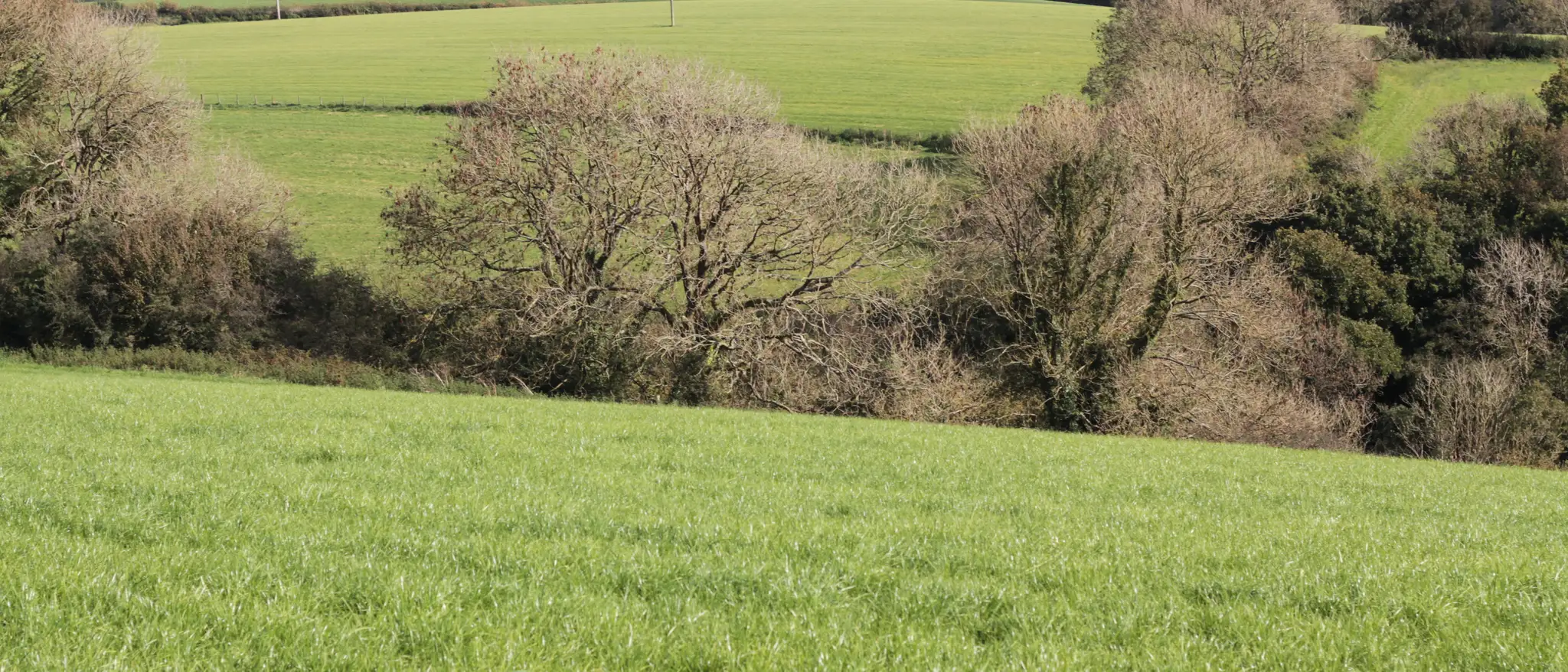
Wet fields
This guide is about farm fields: the wet-lying, poorly drained field that most farms have, which is hard to manage and never yields what it should. If you're looking for seed for a damp garden lawn, see our lawn seed instead.
Why ryegrass fails on wet ground
Most agricultural leys are built on perennial ryegrass. On very wet soils, perennial ryegrasses tend not to persist through the winter. Within a short time the natural grasses come back and take over, and the field's output drops. Reseed the same field with another ryegrass ley and it often goes the same way.
The answer is to sow grasses that cope with wet soil, and to do what you can about the water.
PRIMUS: our ley for wet fields
PRIMUS is our long-term ley for wet conditions: meadow fescue, timothy, festulolium and white clover. It has proved itself on wet, poorly drained fields over many years. With good ley management it gives you:
- a ley that persists on wet problem fields;
- good grazing through the summer;
- cuts of hay and silage.
It is available as organic or conventional seed and is supplied in one-acre bags of 10 kg, so order one bag per acre.
PRIMUS PLUS: the herbal version
PRIMUS PLUS keeps the PRIMUS grasses and clover and adds herbs and a second legume. It comes in one-acre bags. It is also available as organic or conventional seed.
PRIMUS PLUS is suitable for SFI CSAM3, herbal leys, which pays £224 per hectare for new SFI26 agreements. SFI26 closed to new applications on 22 September 2026, and Defra says there'll be another chance in 2027. See the CSAM3 rules →
What each species brings
Every grass in PRIMUS is there because it holds on where ryegrass gives up. In general terms:
- Meadow fescue is a hardy, persistent grass that copes with cold, wet soils better than perennial ryegrass.
- Timothy is very winter-hardy and at home on heavy, wet land. It heads late and makes good hay, which is part of why PRIMUS cuts well.
- Festulolium is a cross between a ryegrass and a fescue, bred to combine ryegrass's growth with a fescue's hardiness.
- White clover produces free nitrogen that feeds the grass, and it makes the sward more palatable, so stock eat more of it.
Hay, haylage and horses
PRIMUS has no perennial or Italian ryegrass in it, so it suits a field kept for hay or haylage, and it grows well even in wetter fields. If you're growing PRIMUS to cut for feeding horses, know two things:
- PRIMUS contains white clover and a festulolium which is part ryegrass.
- It's a farm ley. For a paddock that horses will graze, we make PRIZE, which has no agricultural ryegrass and no clover. They're left out to help keep sugar down and fibre up in grass that's kept short by horses grazing. PRIZE is mostly meadow fescue and timothy, the same lead grasses as PRIMUS, with smooth-stalked meadow grass and two fescues, and it can be cut for hay or haylage too.
See horse paddock seed and reseeding a horse paddock.
Looking after a wet field
The right seed helps a wet field, but it can't drain it. Standard practice is to:
- Check the drainage first. Clear ditches and outfalls, look for blocked or broken field drains, and dig a few holes to see whether water is sitting on a compacted layer. Put right what you can before you reseed.
- Sow when the ground is fit. Wait until the soil is dry enough to work without smearing. Working wet soil makes compaction worse.
- Keep stock off when it's soft. Poaching tears the sward open to weeds and damages the soil. Lighter stock and shorter grazing spells do less harm, and moving gateways and troughs spreads the wear.
- Cut it when grazing is risky. A hay or silage cut takes the grass without the hooves.
- Repair damage early. If a wet winter has poached patches, see reseeding and overseeding grassland.
Choosing yours
PRIMUS and PRIMUS PLUS, organic and conventional, are in our grass ley range. To work out bags for a field measured in hectares, see seed rates. Tell us about the field and ask us if you're not sure which suits it.
Common questions.
PRIMUS is a field ley for grazing and cutting, not for a lawn mown short. On a waterlogged lawn, drainage usually matters more than the seed. See our lawn seed, or ask us about your lawn.
Yes. PRIMUS gives cuts of hay and silage as well as grazing for stock. If the field is dry enough for a ryegrass and clover silage ley, look at our silage leys too.
It has no perennial or Italian ryegrass. It does contain festulolium, a cross between a ryegrass and a fescue.
Yes. Organic PRIMUS and Organic PRIMUS PLUS are both available.
Keep reading
More from the field.
Before you drill
Talk it through with an agronomist.
Tell us the field and what you want it to do. We'll help you settle the mix and the timing — and blend it if you'd like us to.
The Drill
Seasonal advice, in your inbox.
The Drill is our free newsletter delivered periodically to your inbox with seasonal advice and information. A few notes a season - no noise.