
Cereals · 4 min read
Spring cereal blends: why grow a mix of varieties?
How a precise blend of varieties gives you a healthier, more reliable spring cereal crop with fewer inputs, and how to choose between barley, oats, wheat and wholecrop.

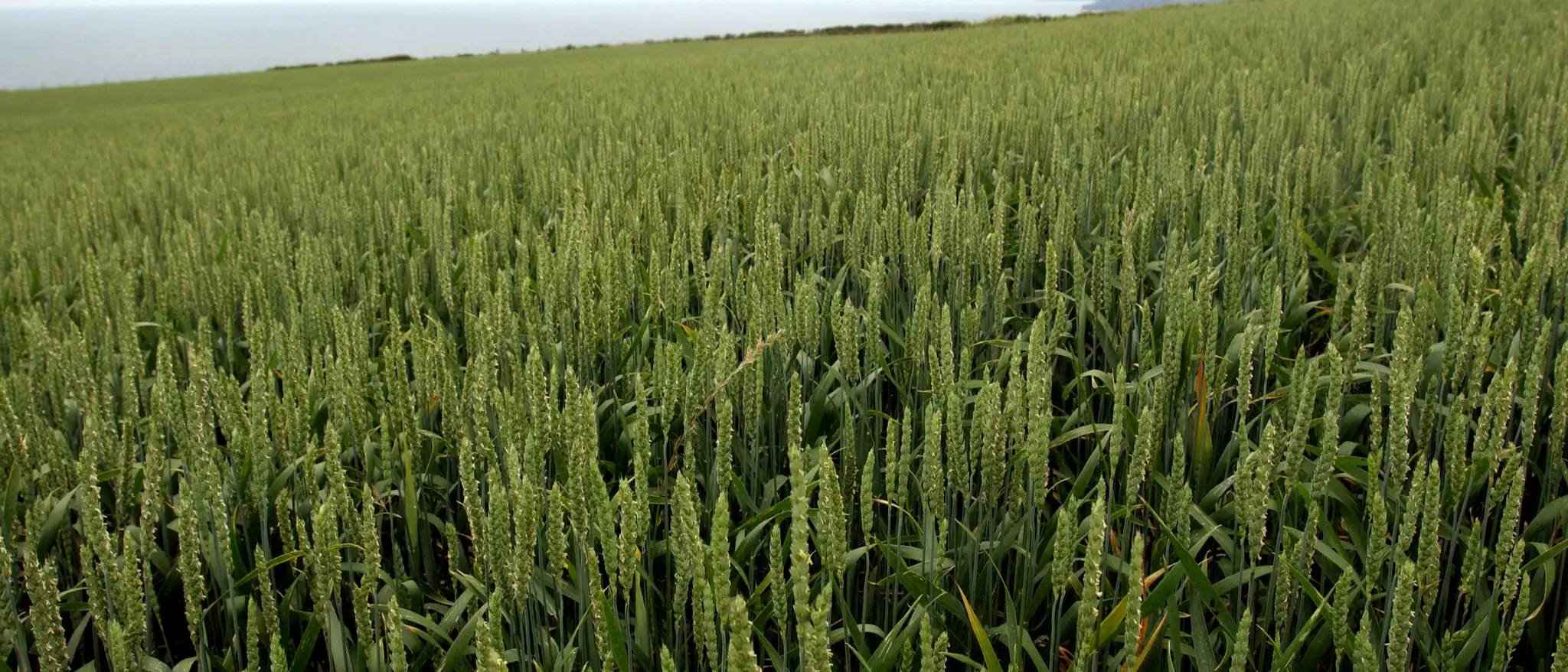
Why grow a blend?
Many modern spring cereals are grown as a single variety and rely on fungicides to stay clean and yield well. Those inputs are expensive, and organic growers can't use herbicides, fungicides or insecticides at all. We've spent years trialling ways to grow spring cereals that give profitable yields without chemical inputs, and our spring cereal blends were one of the first results.
Growing a blend isn't a new idea, but we've brought precision to it. Each blend is a precise mix of varieties chosen by us, and blended so you get the same ratio every time. A good blend gives you:
- Less disease. The varieties carry different disease resistance, so the crop carries less disease. That means a better grain sample, stronger straw and a higher yield.
- Even ripening. The varieties are chosen to ripen at the same time, so the whole field is ready together.
- Reliability. A blend copes better with the year-to-year swings in weather, soil fertility and field conditions than a single variety does.
- Lower inputs. Most conventional farmers apply only a seedbed NPK and a pre-emergence herbicide, then leave the crop alone until harvest.
Farmers have grown our cereal blends for over 40 years, and we keep them up to date, adding new spring cereal varieties from plant breeders once we've tested them at our trial sites.
Organic and conventional
If you farm organically, a blend can help you reach commercial standards without the sprays you can't use. If you farm conventionally, it lets you cut back on expensive inputs without giving up the crop. our cereal blends come as conventional seed or 100% organic seed.
Organic MELODY and Organic CHIME are cereal blends designed for wholecrop and are 70% organic.
Choosing barley, oats or wheat
- Barley: ADVANCE. Its varieties are selected for even ripening, a spread of disease resistance, yield, grain sample, and straw quality and quantity. It's for feed, combined dry, crimped or wholecropped. It isn't for malting, because maltsters need a single variety.
- Oats: CONCERT. In the wetter parts of the UK, many oat varieties suffer foliar fungal disease, often late, after heading. CONCERT was developed to lessen it. It gives a good grain sample that millers like and straw with better feeding quality, and you can combine it dry, crimp it or wholecrop it.
- Wheat: OVATION. Many modern spring wheats depend on fungicides when grown as a single variety. OVATION's varieties were selected for good resistance to cereal fungal diseases and to ripen together, for quality grain and straw. Combine it dry, crimp it or wholecrop it.
Whichever cereal you choose, these three blends give you three ways to use the crop: combine it dry for grain, crimp it, or cut it as wholecrop for animal feed. Not sure which cereal suits your land? Ask us.
Seed rates
Sow at these rates per acre. Each product page gives the current rate.
- ADVANCE: 75–100 kg
- CONCERT: 75 kg
- OVATION: 100–125 kg
Undersowing
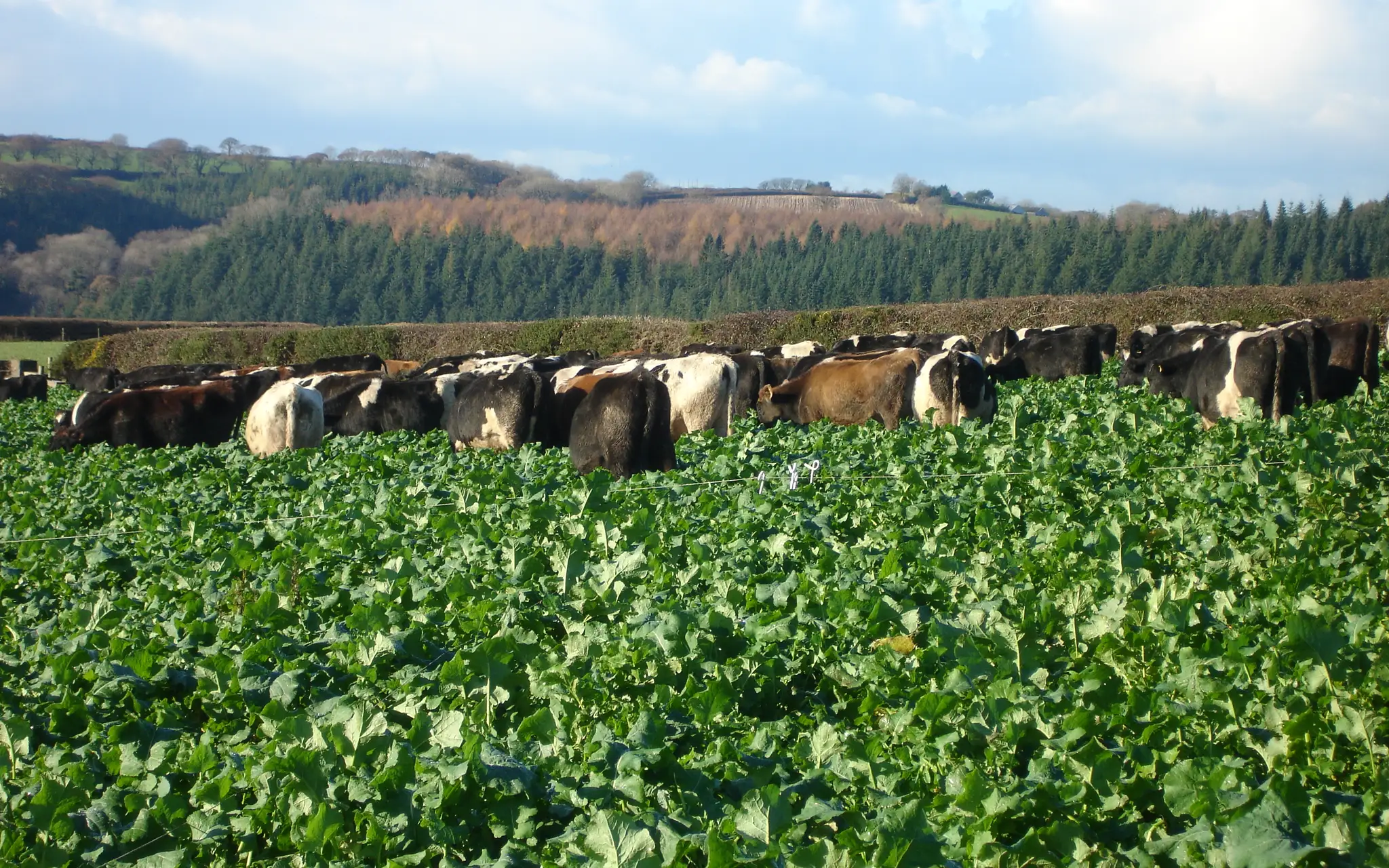
To get more from the field, you can undersow your cereal blend with PREMIUM, our 6-month grass cover crop, at 5 kg per acre. Its grasses won't grow up through the cereal, so they won't cause problems at harvest. It gives you grazing from autumn, after harvest, until you plough for the next crop in spring, and it improves soil structure and captures leftover nitrogen.
Blends for wholecrop: Organic MELODY and Organic CHIME
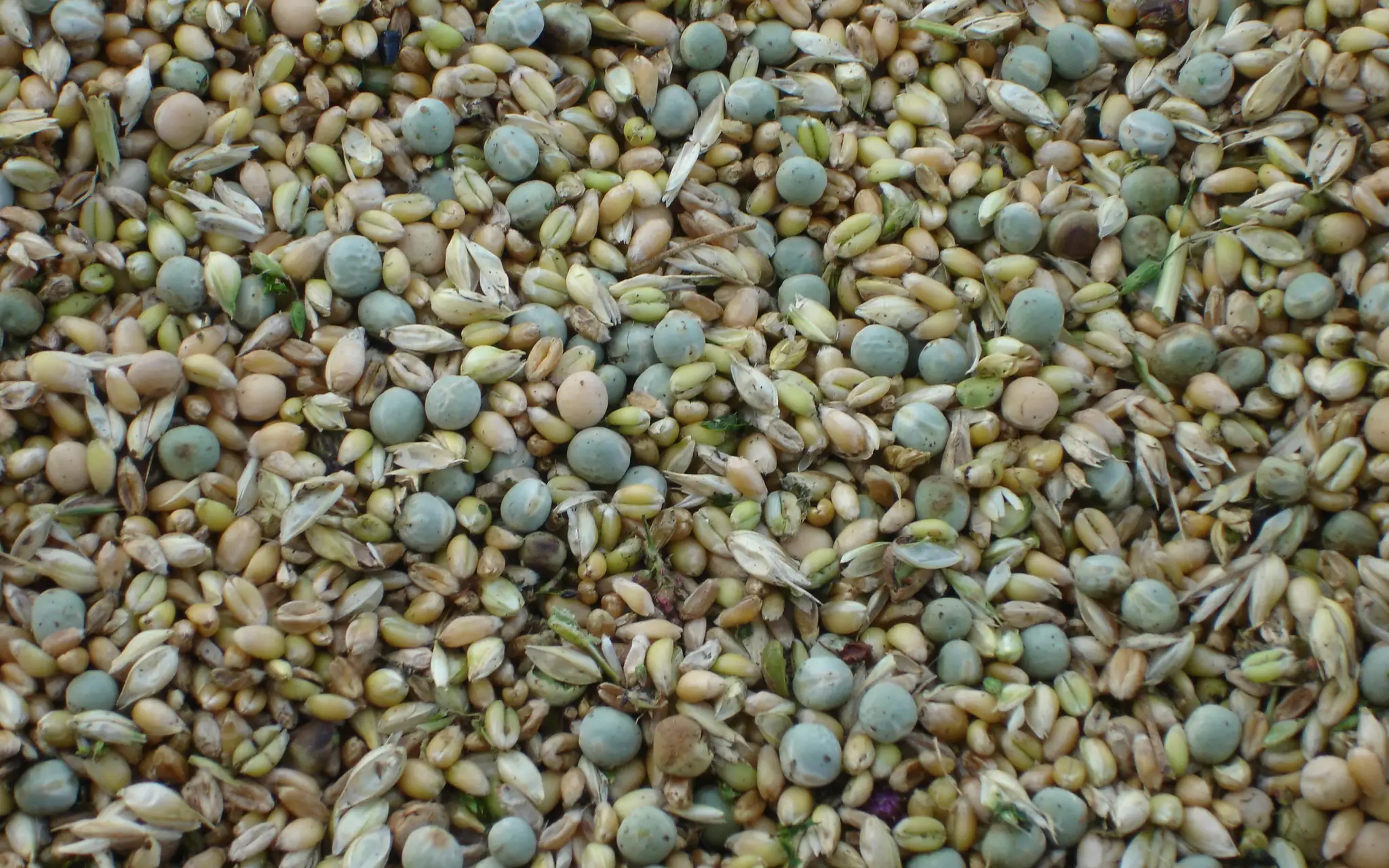
Disease can badly reduce the forage quality of a cereal wholecrop. Organic MELODY (wheat, barley and oats) and Organic CHIME (barley and oats) were developed as wholecrop blends, and are proven to considerably lessen leaf and root disease. Each comes in the same constant ratio, so no one cereal dominates the crop. To compare cereal wholecrop with arable silage and Combicrop®, see our guide to wholecrop silage mixtures.
Sow at these rates per acre. Each product page gives the current rate.
- Organic MELODY: 100 kg
- Organic CHIME: 75–100 kg
Ordering your seed
Every blend comes mixed and ready to drill.
See the full range on our spring cereal page, or ask us which blend suits your farm.
Common questions.
No. We choose varieties that ripen at the same time, so the field is ready to harvest together.
No. Maltsters need a single variety, so ADVANCE is for feed: combined dry, crimped or wholecropped.
The varieties in our cereal blends are chosen so you can grow it without fungicides, insecticides or straw stiffeners, and most farmers growing it apply only a seedbed NPK and a pre-emergence herbicide. Ask us about your own field.
Yes. Less disease means better straw.
We add new spring cereal varieties as plant breeders release them, testing each at our trial sites first. Ask us what's in the current blends.
Seed for this job
Related ranges.

Before you drill
Talk it through with an agronomist.
Tell us the field and what you want it to do. We'll help you settle the mix and the timing — and blend it if you'd like us to.
The Drill
Seasonal advice, in your inbox.
The Drill is our free newsletter delivered periodically to your inbox with seasonal advice and information. A few notes a season - no noise.